Smora: The Vintage Retro Slab Serif Font for Western Design
There’s a particular feeling you get when you see a design that just feels authentic. It might be a brewery logo with a rugged, hand-hewn quality, or a movie poster that instantly transports you to a dusty frontier town. That feeling is often rooted in typography. Finding a font that carries such a strong narrative weight can be a challenge, but a typeface like Smora is built for exactly that purpose. It’s not just a collection of letters; it’s a direct line to a specific, evocative aesthetic—the vintage retro slab serif with unmistakable Western character.
For designers, entrepreneurs, and creators, typography is a silent storyteller. The font you choose for your project speaks volumes before a single word is read. Smora offers a bold, confident voice that leans into nostalgia and rugged elegance. Its thick, stable serifs and carefully crafted curves recall classic wanted posters and vintage signage, yet it feels fresh and relevant for contemporary applications. If you’re working on a project that needs to convey strength, tradition, or adventurous spirit, this is a typeface worth exploring.
Capturing the Spirit of the Frontier in Modern Projects
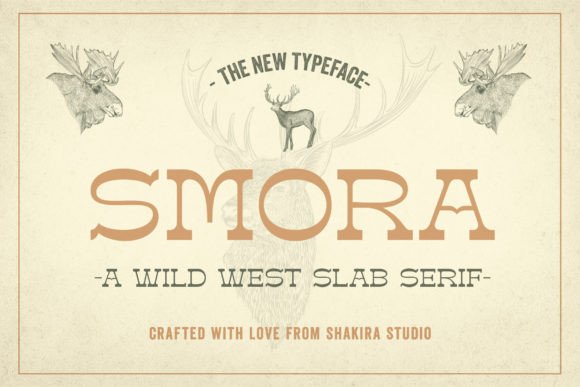
So, what exactly defines the Smora font? At its core, it’s a display font with a strong slab serif foundation. The letters are sturdy and balanced, with a noticeable heft that commands attention. The vintage retro treatment comes through in subtle details—perhaps a slightly weathered texture in the rough version, or stylistic alternates that mimic hand-lettering from the Old West. This isn’t a delicate, whispering font; it’s a declaration.
This makes it incredibly versatile for projects where visual impact is key. Consider a small-batch coffee roaster wanting to highlight its artisanal process. Smora on the packaging instantly communicates craftsmanship and heritage. A digital agency creating a brand for a rugged outdoor apparel line would find its character aligns perfectly with the product’s identity. Even a blogger focusing on DIY crafts or historical topics could use it for headers to establish a strong, thematic visual hook. The font does the heavy lifting of setting the tone, allowing other design elements to complement rather than compensate.
Practical Applications: Where Smora Truly Shines
Understanding a font’s personality is one thing; knowing how to apply it is another. Smora’s bold aesthetic makes it a natural fit for specific design contexts where you want to make a memorable impression.
- Branding & Logo Design: For businesses in the hospitality, spirits, or outdoor recreation sectors, a logo set in Smora can become an iconic mark. It builds instant brand recognition by associating the business with timeless values. Pair it with a clean sans serif font for body text to create a balanced and professional brand identity.
- Packaging & Merchandise: On a bottle label, a coffee bag, or a t-shirt, Smora’s rugged charm adds tangible value. It suggests quality and a story behind the product, which is crucial for packaging design on crowded shelves or online stores.
- Editorial & Print Layouts: Use it for magazine feature headlines, book covers, or event posters. It grabs the eye in a busy editorial layout and sets a powerful scene. Think about a music festival poster or a historical society’s annual report—Smora would fit right in.
- Digital & Social Media: In the fast-scrolling world of social media, a creative font like Smora can stop the thumb. It’s excellent for Instagram graphics, YouTube thumbnails, or website hero sections where you need to communicate your message’s essence quickly and stylishly.
Making It Work: Typography Tips for Your Design Assets
Adopting a premium font like Smora into your toolkit is exciting, but a few practical considerations will help you use it effectively. Good typography isn’t just about picking a cool font; it’s about making it work harmoniously within your design system.
First, always consider readability. Smora is a display typeface, meaning it’s designed for headlines and short bursts of text, not long paragraphs. Its strength is in its impact at larger sizes. For body copy, pair it with a highly readable serif font or sans serif font. Test this font pairing at various sizes to ensure your message is clear. A common and effective approach is to use Smora for your main heading, a complementary sans serif for subheadings, and a simple, legible font for body text.
Second, explore the font’s full potential. A well-crafted typeface often includes multiple styles. Does Smora come with a clean version and a textured one? Are there alternate characters or ligatures? Reviewing these included styles allows you to add variety and authenticity to your design assets without needing another font. For a vintage label, the textured version might be perfect, while the cleaner style could work for a more modern website header.
Finally, think about licensing. Since Smora is positioned as a commercial font, it’s built for professional use. Before starting a client project or selling merchandise, ensure you have the correct license. This is a fundamental part of being a professional designer or business owner—it protects you and respects the work of the type designer.
Infusing Your Projects with Timeless Character
In a landscape saturated with minimalist and geometric fonts, choosing something with as much character as Smora is a strategic decision. It’s a tool for differentiation. It helps a brand stand out by embracing a visual language that feels established and confident. For a marketing professional or creative entrepreneur, it’s about building a visual identity that resonates emotionally with an audience.
The vintage retro trend isn’t just about nostalgia; it’s about authenticity. Audiences respond to designs that feel genuine and crafted with intention. Smora provides that authenticity in spades. It’s a creative font that can elevate a simple project into something memorable, whether it’s a wedding invitation for a rustic-themed event, a menu for a steakhouse, or the web design for a heritage brand.
Ultimately, typography is a bridge between your idea and your audience. A font like Smora is a sturdy, well-built bridge with a distinct architectural style. It won’t be the right choice for every project, but for the ones where its personality aligns with your goals, it can be transformative. It invites your audience into a story, sets a powerful mood, and gives your work a distinctive, professional edge. By understanding its strengths and applying it thoughtfully, you can harness its rugged elegance to create designs that are not only beautiful but also deeply communicative.