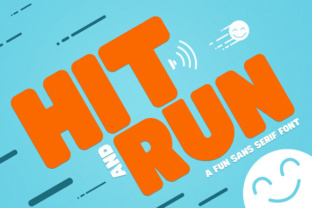
Hit and Run: A Playful Sans Serif for High-Energy Design
Let's be honest: most professional fonts feel a little too serious. They're built for corporate reports, legal documents, and the kind of sterile presentations that make you check your watch. But what about the projects that need a pulse? The birthday invitations, the playful brand identities, the social media graphics that need to stop a scroller in their tracks? That's where a typeface like Hit and Run comes in, offering a burst of energy that’s ready to make your layouts pop.
This isn't your average sans serif. Hit and Run is a premium font designed with a specific personality: fun, dynamic, and incredibly versatile. It’s the typographic equivalent of a confetti cannon—immediately setting a joyful, engaging tone. The letterforms are clean and modern, but with subtle quirks and a bouncy baseline that injects movement into any design. It’s a creative font that understands its job is to communicate excitement and approachability, making it a standout asset in any designer's toolkit.
Where Playful Typography Truly Shines
Understanding a font's personality is one thing; knowing where to deploy it is what separates good design from great strategy. Hit and Run excels in scenarios where you need to connect on a human, often youthful, level. Think beyond just "kids' stuff." Its charm is in its ability to make any brand or project feel more accessible and energetic.
For branding and logo design, it’s a secret weapon for businesses targeting families, the education sector, creative services, or any niche where a friendly, approachable identity is key. A children's boutique, a family photographer, or a trendy ice cream shop could build an entire brand identity around this typeface, ensuring their visual communication is instantly recognizable and inviting.
In the realm of packaging design, Hit and Run can make a product leap off the shelf. Imagine it on snack packaging, toy boxes, or cosmetics aimed at a Gen Z audience. The font’s energy translates directly into perceived product energy. Similarly, for social media graphics—especially Instagram posts, Stories, and Reels covers—it’s perfect for grabbing attention in a fast-moving feed. Its clarity at various sizes ensures your message isn’t lost, while its style ensures it’s not ignored.
From Digital Screens to Physical Keepsakes
The utility of a well-crafted display font like Hit and Run bridges the digital and physical worlds seamlessly. For web design, it can be used strategically for headlines, call-to-action buttons, and hero text to inject personality into a site without sacrificing the readability of body copy (which you’d pair with a simpler sans serif or serif font). On blogs, it can be used for post titles and pull quotes to break up text and add visual interest.
When it comes to print materials and editorial design, this typeface shines in posters, flyers, magazine headers, and event programs. Its bold presence commands attention in layouts where visual hierarchy is crucial. For invitations—whether for a child's birthday party, a baby shower, or a casual summer event—Hit and Run sets the perfect tone before the guest even reads the details. It tells them this will be a fun, relaxed occasion.
Don't overlook its potential in merchandise and digital products. Think t-shirts, mugs, stickers, and tote bags for a boutique brand. Or consider using it in the design of downloadable planners, educational worksheets, or digital stickers. Its playful nature adds inherent value and appeal to these products.
Making It Work: Practical Font Pairing and Usage
A powerful font needs a thoughtful approach. The key to using Hit and Run effectively is to let it be the star of the show in headlines and short bursts of text, then support it with a more neutral counterpart.
Font Pairing is Crucial: Avoid pairing it with another highly stylized script font or handwritten font, as this can create visual chaos. Instead, pair it with a clean, geometric sans serif font for body copy (like Montserrat or Poppins) or even a classic, highly readable serif font for a surprising contrast that feels both modern and grounded. This pairing creates a clear hierarchy: Hit and Run for emotion and impact, the secondary font for clarity and information.
Readability First: While it’s a display font, its design maintains excellent readability for headlines. However, it’s not intended for long paragraphs of body text. Use it for titles, subheadings, buttons, and short labels where its character can be fully appreciated without tiring the reader’s eye.
Review Your Styles: A quality premium font often comes with more than just the basic alphabet. Check if Hit and Run includes stylistic alternates, ligatures, or multiple weights. These features are gold for customization, allowing you to tweak the look for different applications—maybe a slightly softer alternate for a baby brand versus the standard set for a youth sports league.
Commercial Licensing: Before using any commercial font in client work or for sale, always double-check the license. Ensure it covers your intended use, whether that's for a logo, merchandise, or a digital product you plan to sell. This is a non-negotiable step in professional practice.
Injecting Energy into Your Creative Process
Choosing a font like Hit and Run is about more than just aesthetics; it's a strategic decision about the feeling you want to evoke. It’s a tool for audience engagement. When your typography matches the energy of your message, you create visual consistency that strengthens brand recognition. A customer should be able to recognize your Instagram post or product packaging from the typography alone.
So, the next time you're working on a project that needs to feel joyful, energetic, and approachable, consider stepping away from the usual suspects. A typeface with personality can be the catalyst that transforms a good layout into a memorable one. It’s about giving your designs a voice that’s ready to play, connect, and, quite literally, run with a fun idea.