Andaroo Bold: A Typeface for Fearless Creators
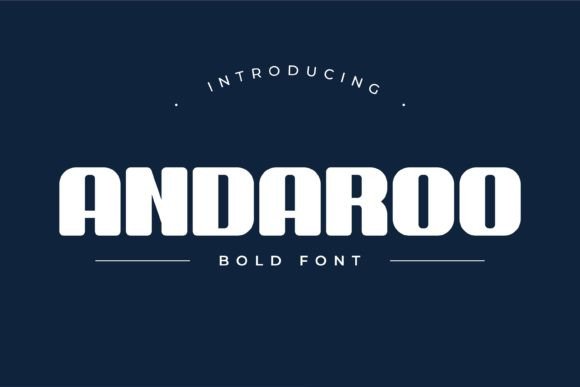
There’s a moment in every design project where the typeface either vanishes into the background or steps forward to own the stage. If you’re tired of playing it safe with fonts that whisper when you need them to shout, it’s time to meet a typeface that understands the assignment. Andaroo Bold is a display font designed for impact, built to carry the weight of a headline, the confidence of a logo, and the clarity of a call-to-action without breaking a sweat.
The Anatomy of a Statement Font
What makes a bold font work isn’t just thick strokes. It’s proportion, rhythm, and personality. Andaroo Bold balances strong, commanding letterforms with just enough refinement to avoid feeling heavy-handed. The terminals have a subtle softness that keeps it modern rather than retro, and the consistent stroke weight across characters gives it a stable, trustworthy presence. It’s the kind of typeface that looks equally at home on a minimalist business card and a vibrant social media banner.
For designers who think in terms of brand systems, Andaroo Bold offers a distinct voice that can anchor an entire visual identity. It’s not trying to be everything—it’s doing one thing exceptionally well: making sure your words are seen and remembered.
Where This Typeface Truly Shines
Let’s talk about real projects. A local coffee roaster rebranding their packaging needs a font that feels artisan but not precious. Andaroo Bold on the front of a bag of single-origin beans tells customers this brand takes its craft seriously. A fitness coach creating Instagram graphics needs headers that cut through a cluttered feed—this font does that without needing five filters and a drop shadow.
Consider these practical applications:
- Logo design where the name needs to stand alone without an icon
- Website hero sections that require immediate visual hierarchy
- Event posters that must be legible from a distance
- Merchandise like t-shirts or tote bags where simplicity wins
- Editorial layouts for magazine covers or chapter openers
- Digital products such as ebook covers or course thumbnails
It functions beautifully as a headline font paired with a clean sans-serif for body text, but it also holds its own in short-form copy where every word needs to land. Think product names, taglines, or promotional banners.
Building Visual Consistency Across Touchpoints
One of the biggest challenges in branding isn’t choosing a great font—it’s using it consistently. When you find a typeface like Andaroo Bold that carries enough character to be recognizable but enough versatility to work across contexts, you solve half the consistency problem immediately. Use it for your website headers, your email newsletter titles, your product labels, and your presentation slides. Over time, that typographic choice becomes synonymous with your brand’s voice.
This is where a premium font earns its value. Free fonts often come with limited character sets, inconsistent weights, or unclear licensing. A well-crafted commercial font gives you the full toolkit: multiple styles, extended language support, and the legal clarity to use it in client work and commercial products without second-guessing.
Pairing Andaroo Bold With Other Typefaces
A bold display font rarely works alone. The magic happens in combination. For a contemporary, professional look, pair Andaroo Bold with a geometric sans-serif like Montserrat or Poppins for body copy. If you’re aiming for something with more editorial elegance, try it alongside a humanist serif such as Lora or Merriweather. The contrast in weight and style creates visual interest while maintaining readability.
A few pairing principles to keep in mind:
- Contrast is your friend. Pair a bold, expressive font with something neutral and legible for supporting text.
- Limit your palette. Two to three typefaces maximum per project keeps things cohesive.
- Test at actual size. What looks balanced in a design file might feel cramped or sparse in final output—always check.
- Consider context. A font pairing that works for a website might need adjustment for print materials where resolution and paper stock affect perception.
Andaroo Bold works particularly well as the dominant voice in a typographic hierarchy, with secondary fonts handling the informational heavy lifting.
Readability Isn’t Optional
Bold doesn’t mean illegible. One common mistake is choosing a decorative or ultra-bold font for body copy because it looks striking in a headline. Andaroo Bold is designed for display use—meaning it’s optimized for larger sizes where its personality can breathe. Use it for headlines, subheadings, and short bursts of text where impact matters more than extended reading comfort.
For longer paragraphs, product descriptions, or blog content, switch to a more neutral companion font. Your audience shouldn’t have to work to read your words. The goal is effortless communication with strategic moments of visual emphasis.
Licensing and Practical Considerations
Before you commit to any font for commercial work, understand the license. Can you use it in client projects? Is it cleared for merchandise? What about digital products you sell? Andaroo Bold comes with licensing that covers a range of commercial applications, which means you can confidently incorporate it into branding packages, product lines, and marketing campaigns without legal headaches down the road.
This matters more than most people realize. A beautiful font with restrictive licensing becomes a liability. A well-designed font with clear, permissive licensing becomes a reliable asset in your creative toolkit.
Making It Yours
The best typeface choices feel inevitable in hindsight. They match the energy of the brand, the expectations of the audience, and the goals of the project. Andaroo Bold isn’t for every situation—no font is. But for projects that demand presence, clarity, and a touch of modern confidence, it delivers exactly what you need.
Try it on your next logo concept. Test it in a social media template. Set a headline in it and see how the rest of your design responds. Sometimes the right font doesn’t just complete a design—it transforms how you approach the entire project.