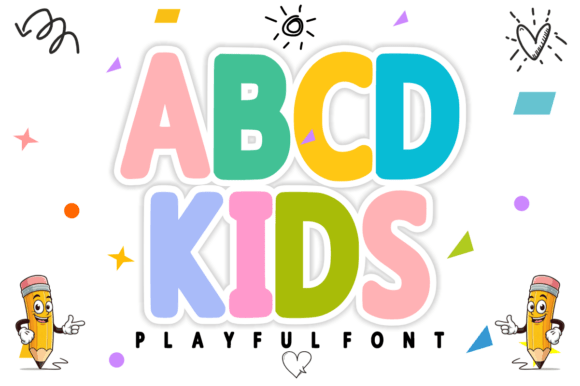
ABCD Kids: The Playful Font for Unforgettable Designs
There's a moment in every creative project where the typography either clicks into place or falls flat. For anyone designing for children, families, or education, that moment is crucial. You need a font that doesn't just convey words but embodies the energy, clarity, and joy of its subject. This is where a specific typeface can transform your work from merely functional to genuinely engaging. Enter a bold, friendly display font built for exactly this purpose, one that brings a chunky, rounded aesthetic to the forefront of your designs.
Beyond Cute: Strategic Typography for Youthful Audiences
Choosing a font for a project aimed at kids or families goes far beyond picking something "cute." It's a strategic decision that impacts readability, brand perception, and emotional connection. A heavy, formal serif font might feel authoritative on a law firm's website, but on a child's birthday invitation, it creates distance and confusion. Conversely, a playful, rounded typeface immediately communicates approachability and fun. This particular font family excels here, offering a visual language that speaks directly to its audience. Its generous letter spacing and thick strokes ensure that words are easy to decipher for young readers, while its friendly curves evoke a sense of safety and playfulness. This isn't just about aesthetics; it's about clear communication and building instant rapport.
For small business owners in the kids' market, this choice is foundational. Imagine a local tutoring center's brochure. Using a standard, default font feels uninspired and forgettable. Implementing a font with this joyful character, however, instantly sets a tone. It tells parents, "We make learning engaging," and tells kids, "This place is fun." The same principle applies to a children's yoga instructor's social media posts or a pediatric dentist's appointment reminders. The typography becomes a silent ambassador for your brand's personality, helping to build recognition and trust before a single word of copy is read.
Practical Applications: From Classroom Walls to E-commerce Shops
The true test of a creative font is its versatility across different mediums. This is where a well-designed display typeface proves its worth as a valuable design asset. Let's explore some concrete scenarios where it can solve problems and elevate results.
- Brand Identity & Logo Design: For a brand called "Sprout Seeds" selling children's gardening kits, a logo set in this font immediately conveys the brand's core message—growth, nature, and child-friendly fun. The bold weight ensures it remains legible when scaled down for a website favicon or a social media profile picture.
- Packaging Design: On a shelf crowded with competing products, packaging for organic kids' snacks needs to stand out. Using this typeface for the product name creates a bold, eye-catching focal point. Its legibility ensures parents can read it quickly, while its playful style appeals to the children who will ultimately choose it.
- Digital Products & Marketing: Creating a downloadable PDF activity pack for your Etsy shop? Using this font for the title page and section headers makes the document feel cohesive and professionally designed. For social media graphics, it's perfect for short, impactful headlines in Instagram stories or on Pinterest pins, grabbing attention in a fast-scrolling feed.
- Editorial & Print Layouts: Designing a newsletter for a preschool or a program for a school play? This font works beautifully for headlines and pull quotes, breaking up text blocks and adding visual interest. Paired with a clean, simple sans-serif for body copy, it creates a balanced and readable layout.
- Merchandise & Event Styling: This is where the font truly shines for crafters and DIY enthusiasts. Its optimized design for cutting machines like Cricut and Silhouette makes it a dream for creating personalized T-shirts, tote bags, and decals. For a child's birthday party, it can be used to design cohesive invitations, banners, favor tags, and cake toppers, tying the entire event's aesthetic together with a professional touch.
Making It Work: Font Pairing and Practical Considerations
A powerful display font is a star player, but it needs a supporting cast. The key to using this typeface effectively is in thoughtful pairing. Because it is bold and has a strong personality, it's best used for headlines, titles, and short bursts of text. For longer paragraphs or body copy, you need a complementary partner that is highly readable and doesn't compete for attention.
A simple, geometric sans-serif font is often the perfect match. Think of fonts like Poppins, Lato, or Nunito. Their clean lines and neutral character provide a calm backdrop, allowing the playful display font to take center stage without overwhelming the reader. For a slightly warmer feel, a friendly, legible handwritten font could also work for subheadings, but be cautious—pairing two highly decorative fonts often leads to visual clutter. Always test your pairings by creating a sample layout with real text. Check for contrast in weight, style, and overall "voice" to ensure they harmonize rather than clash.
Another critical step is reviewing the included font styles. Does the family come with a regular, bold, and outline version? Outline styles are fantastic for creating layered effects in design software or for use with cutting machines to make stickers and decals with a colored border. Understanding the full toolkit you have available allows for more creative and sophisticated applications. Finally, for any commercial project—whether it's a logo for a client, merchandise you plan to sell, or marketing materials for your own business—always verify the licensing. Ensure the font's license permits commercial use to avoid any legal hiccups down the road.
Ultimately, the goal of any design choice is to serve the project's objective. If your objective is to communicate with joy, clarity, and a sense of fun, aligning your typography with that goal is non-negotiable. A font like this provides a direct pathway to that visual language. It helps create a consistent and recognizable brand identity, improves engagement through its approachable aesthetic, and ensures your message is not just seen, but felt. By integrating it thoughtfully with other design elements and respecting its strengths, you can bring a burst of imaginative energy to everything from a classroom worksheet to a product launch campaign.